


HotelTonight: Hotel Deals
4.317.95K Reviews
App Specs
- Version
- 26.7.0
- Updated On
- License
- Free
- Downloads
- 10,000,000+
- Developer
- HotelTonight
- Categories
- Travel & Local
- Platform
- Android, iOS
Screenshots




 Analysis by AppCompare
When I need a hotel at short notice, I want to spend less time comparing endless listings and more time deciding whether a room actually fits the night ahead. That is the situation where HotelTonight makes the most sense to me. It is a free travel app from HotelTonight, built around finding hotel stays through a phone rather than planning every detail weeks in advance. I found it most useful for sudden changes, short city breaks, and those awkward evenings when continuing to travel is no longer sensible.
The app belongs to the Travel & Local category and has been available since Jul 27, 2011. Its current version is 26.7.0, and it works on devices running Android 8.0 or later. That combination tells me this is a mature service rather than a brand-new experiment, although the experience still depends heavily on the hotels available in the place and on the date I search.
How HotelTonight works in a real shared-use situation
A realistic example is a household where one person is driving home from a weekend trip while another person is checking options from the passenger seat. The driver should not be using the phone, but the other traveler can open the app, search the destination, compare the available hotels, and discuss whether stopping overnight is better than pushing on. In that situation, the app is less about leisurely browsing and more about turning a vague problem into a manageable choice.
I like this kind of use because the search is connected to an immediate need. Instead of starting with a large travel plan, I can begin with the city where I expect to end up and see whether a hotel fits the situation. That makes the app particularly practical for delayed journeys, unexpected overnight stays, or a spontaneous decision to extend a trip.
It is also useful when two people share responsibility for a booking. One person can look at location and room details while the other checks the route or confirms the arrival plan. That division of work is more efficient than passing a phone around while trying to remember which hotel looked best. Still, I would not treat the app as a complete household travel organizer. It helps with the hotel decision, but the people using it still need to coordinate transport, arrival timing, and who is responsible for the reservation.
The strongest part of the experience is the focus on immediate hotel availability. Traditional hotel research often encourages me to compare every possible property, neighborhood, and room type before making a decision. HotelTonight feels more useful when my choices are already narrowed by time. That focus can be refreshing, but it also means I should not expect the same broad planning experience I would get from a general hotel marketplace.
Setting up the app without blurring account boundaries
For a shared device, I would decide first whose account is being used and who will be responsible for the booking. This sounds obvious, but it matters more with travel reservations than with casual apps. A hotel booking is tied to a real stay, a real guest, and a real arrival. If several people use one phone, they should agree on the account holder before searching seriously.
Worth Reading Before You Choose

EA SPORTS FC Mobile 26 Is a Bigger Football Game, but It Takes Time

Flipboard Shows What News Apps Must Do Beyond the Feed

Switching to Android Auto Means Rethinking Your Driving Routine

Google Calendar Makes a Crowded Week Easier to Manage

Ludo King Makes the Most of the Minutes Between Plans

Baby Panda World Brings Quick Play to Modern Phones, but Its Game Library Feels Busy
I would also avoid treating a shared tablet or family phone as if it were automatically a shared travel account. The app can be convenient for joint decision-making, but the person completing the reservation should be someone who can keep track of the booking information and communicate with the hotel if plans change. That is a practical boundary, not a criticism of the app.
The free price makes it easy for more than one household member to install the app and use it independently. I prefer that arrangement when adults travel at different times, because each person can search for their own stay rather than mixing unrelated trips into one browsing session. On a device used by several people, however, I would close the app after making a reservation and avoid leaving booking details visible.
Another useful habit is to pause before confirming a room. Last-minute hotel apps encourage quick decisions, which is part of their appeal, but speed can make people overlook the basics. I check the neighborhood, the expected arrival time, the room description, and the total booking conditions shown during the reservation process. I also make sure everyone traveling understands which hotel was selected. A fast booking is only helpful if the group knows where it is going.
For younger members of a household, I would keep the app in an adult-led role. The content rating is Everyone, but that does not make a hotel reservation a child’s responsibility. A young person might help compare locations or look at pictures, while an adult should handle the actual travel decision and booking details. This distinction is especially important when the stay is being arranged under pressure.
Coordinating a booking when several people are involved
HotelTonight works best when the group agrees on a small set of priorities before opening the search. I usually think about three things first: where we need to be, how late we may arrive, and what level of comfort is acceptable for one night. Without that conversation, people can waste time comparing attractive options that do not fit the route or the group’s budget expectations.
A useful workflow is to have one person search and another act as the checker. The searcher can identify suitable hotels, while the checker confirms the address and asks practical questions such as whether the location makes sense for the next morning. This is more reliable than letting several people browse separately and then discovering that everyone chose a different favorite.
I would also save or communicate the important booking information immediately after the reservation. The person who made the booking should tell the travelers the hotel name, location, expected arrival plan, and who will show the reservation if needed. Even when a booking is made from a shared device, the group should not assume that everyone can retrieve it later.
This is where the app’s last-minute character creates a trade-off. It can help a household react quickly, but it does not remove the need for a human plan. If one person books while another is offline, the rest of the group may not know about the change. For solo travelers that is less of a problem. For families, couples, or groups of friends, a short message or call after booking is still essential.
The app is also a better fit for a clear overnight decision than for a complicated multi-stop itinerary. If I am arranging several rooms, coordinating different arrival times, or planning a long trip with multiple destinations, I would rather use a broader booking service and a separate itinerary tool. HotelTonight is strongest when the immediate question is simply, “Where can we stay tonight or soon?”
Age, trust, and sensible use on a household device
The Everyone age rating makes the app approachable for general household browsing, but the rating should not be confused with independent booking permission. Hotel stays involve identity, payment, travel logistics, and sometimes late-night arrival. Those are adult decisions in most families, even if a teenager is perfectly capable of comparing hotel locations.
I would let a younger traveler participate by explaining why one location is better than another or by checking whether the hotel is near the next day’s destination. That turns the app into a useful travel-planning tool without handing over responsibility for the reservation. It is also a good way to teach practical judgment: the cheapest-looking option is not automatically the most convenient if it creates a difficult journey in the morning.
Trust matters between adults as well. If a shared device is used to make a booking, everyone should know who authorized it and who can change the plan. I would not assume that another household member understands the same travel priorities I do. One person may care most about being near a station, while another may prioritize a quieter neighborhood or a simpler drive. The app presents the options, but the household still needs a shared decision.
I also prefer to keep account use personal when possible. A shared search can be helpful, but a shared login may create confusion about which trip is being viewed or who should receive the relevant information. Since the app is free to install, separate use by adults is a cleaner arrangement for households that travel independently. The shared-device scenario is best reserved for collaborative planning rather than permanent account mixing.
HotelTonight has a 4.3 average from around 70 thousand ratings and roughly 18 thousand written reviews, while its Android reach has passed 10 million installs. Those figures suggest that many travelers find the basic idea useful, but they should not replace my own judgment about a specific hotel or destination. A popular app can still show limited choices in a particular area, and a strong overall reputation does not guarantee that every available room will suit a family or group.
Where it beats ordinary hotel searching
Compared with searching hotel websites one by one, HotelTonight gives me a more focused starting point when time is limited. I do not have to decide which chain to investigate before I know what is available for the night. That is helpful when a train is delayed, a road trip takes longer than expected, or a host cancels unexpectedly.
Compared with a general hotel comparison service, the app feels less like a complete catalog and more like a quick decision tool. That can reduce choice overload. I am not always looking for the largest possible selection; sometimes I need a reasonable place in a useful location without spending an hour researching.
The trade-off is that a broad alternative may be better for advance planning, loyalty programs, specific room requirements, or a carefully chosen neighborhood. If I need adjoining rooms, a particular property brand, a long stay, or a detailed cancellation comparison, I would widen the search. HotelTonight should be viewed as a specialist for urgent or flexible hotel decisions, not as the only travel app a household needs.
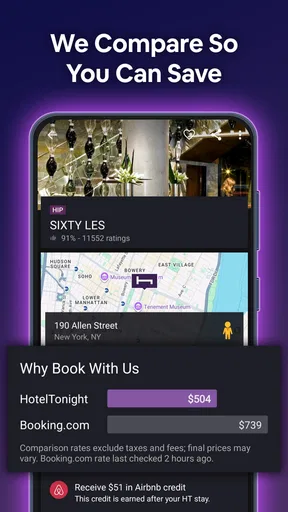
The store summary also highlights a benefit involving ten percent back in Airbnb credit when hotels are booked through the service. That may appeal to travelers who use both hotel and Airbnb stays, but I would treat it as an extra consideration rather than the main reason to choose a room. The hotel’s location, suitability, and booking terms still matter more than a future credit.
Small habits that make the experience more reliable
My first tip is to search with the next morning in mind, not only the current evening. A hotel that looks convenient at night may be a poor choice if it sends the group in the wrong direction the next day. In a shared household decision, asking “Where do we need to be after breakfast?” can eliminate several tempting but impractical options.
My second tip is to separate browsing from approval. One person can collect two or three realistic choices, then the traveler who will actually stay can make the final call. This avoids the common problem of a family member selecting a hotel based on appearance while the guest is the one who must handle the arrival.
My third tip is to use the app as a response tool, not as an excuse to delay a decision. If the group already knows it needs a room, endless comparison can become counterproductive. I would set a short limit for reviewing the available options, then choose the one that best balances location and comfort. The app’s value is partly in reducing hesitation.
A fourth insight is that shared use works better when the phone is treated as a planning surface rather than the source of truth for the whole group. After booking, I would communicate the details through the household’s normal channel and make sure the traveler can access what they need independently. That simple step prevents a dead battery, a misplaced phone, or a change of hands from becoming a travel problem.
Finally, I would not use the app casually on a shared device if the household is not ready to act. Last-minute availability can create pressure to book before everyone has agreed. Browsing is harmless, but once a suitable room appears, the conversation should move quickly to responsibility, arrival, and suitability. That is the point where thoughtful coordination matters more than the interface.
Who should use it and who should choose something else
I recommend HotelTonight to solo travelers, couples, and small groups who value speed and flexibility. It is especially appealing when the destination is already known and the main challenge is finding a hotel without a long planning session. It also suits households that occasionally make joint travel decisions from one phone, provided an adult remains responsible for the reservation.
I would be more cautious recommending it to travelers with strict requirements. If the trip depends on a particular hotel, a very specific room arrangement, a long advance booking window, or extensive itinerary coordination, a traditional hotel site or larger comparison service may be a better first stop. Those tools can be less focused, but their broader planning approach may fit the situation better.
I would also skip relying on it alone when the group has not agreed on its priorities. No booking app can resolve disagreement about location, comfort, or arrival logistics. In that case, the best improvement is a short conversation before searching, not more time inside the app.
My household verdict
After using HotelTonight as a travel decision tool, I see its main strength clearly: it helps turn an urgent hotel problem into a focused search. The free app is easy to justify keeping on a phone, and its long presence in the travel space gives it the feel of an established option. The developer, HotelTonight, has kept the product centered on hotel bookings rather than trying to become an all-purpose household travel manager.
For shared use, I would recommend a simple rule: browse together if helpful, but keep responsibility clear. An adult should approve the booking, the actual traveler should know the details, and the group should communicate the plan outside the app. The Everyone rating makes it suitable for general household access, yet the practical responsibility of booking a room still belongs with someone who understands the trip.
My final view is positive, with a clear boundary. I would open HotelTonight when plans have become immediate and I want a focused hotel search without starting a full travel project. I would choose a broader alternative for complex itineraries or highly specific accommodation needs. Used in the right situation, it is a practical companion for sudden stays and shared travel decisions; used as a replacement for every kind of hotel planning, it is less convincing.
Pros
- Last-minute bookings can unlock significant discounts on unsold rooms.
- The app offers a quick
- streamlined booking process for spontaneous trips.
- Hotel photos
- amenities
- and guest ratings help compare available stays.
- Many listings include central locations close to attractions and transport.
- Digital booking details make check-in information easy to access on the go.
Cons
- Availability can be limited in smaller cities or outside peak travel periods.
- Prices may rise sharply when demand is high or events are taking place.
- Some bookings have strict cancellation policies and limited refund options.
- Room types and specific views may not always be guaranteed at booking.
- Extra taxes
- resort fees
- or deposits can increase the final cost.
FAQs for HotelTonight: Hotel Deals
What is HotelTonight: Hotel Deals, and how does it work?
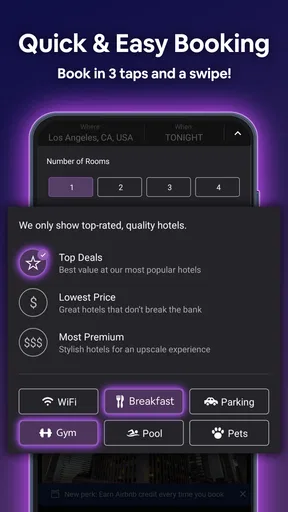
HotelTonight is a mobile booking app focused on finding discounted hotel rooms, often for same-day or last-minute stays. After entering a destination and selecting dates, you can browse available properties, compare room details, view photos, and book directly through the app. It is especially useful when your travel plans change unexpectedly or you need accommodation quickly.
Can I use HotelTonight to book a room in advance?
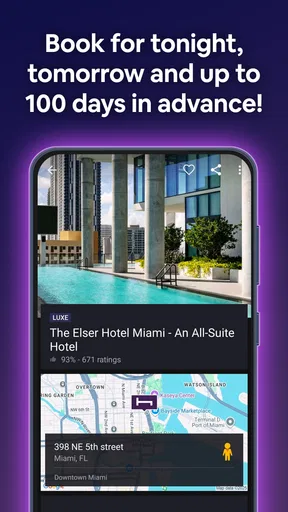
Yes. Although HotelTonight is well known for last-minute hotel deals, the app also offers advance bookings in many destinations. Availability and how far ahead you can reserve depend on the specific hotel and travel dates. It is worth checking early if you have fixed plans, but users should also compare prices and cancellation terms before completing the reservation.
Are HotelTonight bookings refundable or cancellable?
Cancellation policies vary according to the hotel, room type, rate, and booking conditions shown during checkout. Some reservations may be non-refundable, while others allow cancellation within a specific period. Before paying, carefully review the cancellation deadline, refund rules, and any applicable fees. Once the booking is confirmed, these conditions may be difficult or impossible to change.
What information is included before booking a hotel?
HotelTonight generally displays important information such as the property name, location, photographs, room category, nightly price, taxes or fees, amenities, guest ratings, and check-in details. However, descriptions and available facilities can differ between listings. Read the complete booking screen carefully, especially the total price, bed configuration, parking information, and policies for arriving late or bringing pets.
Is HotelTonight safe and reliable for booking accommodation?
HotelTonight is designed to process hotel reservations through its app, and bookings normally include confirmation details that can be presented at check-in. Nevertheless, reliability also depends on the individual property and the accuracy of the listing. Keep your confirmation accessible, verify the hotel’s address and check-in hours, and contact customer support promptly if the hotel cannot locate your reservation.


